
Welcome! I write historical and contemporary fiction that emphasizes warm and well-drawn characters against a background of world events and compelling settings. My popular Northminster Mystery series follows Major Giles Vernon and Dr Felix Carswell as they solve murders in a crime-infested early Victorian English city, starting with The Butchered Man.
I co-founded Anthemion Software, a small company creating software for software developers and writers, including the Jutoh e-book editor and the Writer's Café creativity toolkit.
You can buy my books on Amazon.
I hope you enjoy my site, and more importantly, my books!
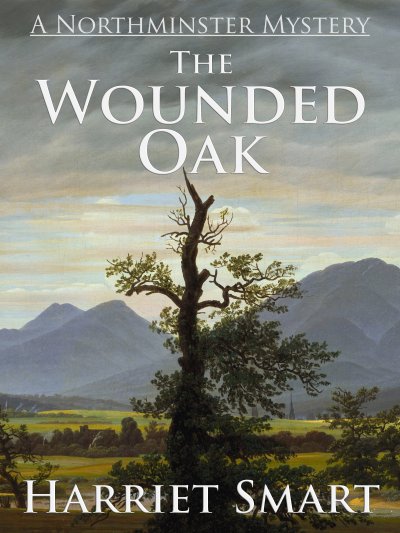
The Wounded Oak is my latest novel in the Northminster Nysteries. When walking in his gardens on a glorious spring morning, the debonair Rector of Swalecliffe, John Ravenell, is shot and almost killed by a hidden rifleman. This extraordinary event calls Major Giles Vernon and Felix Carswell to pursue another dangerous and complicated investigation, this time in the idyllic seaside town of Swalecliffe.
Ravenell survives the attack due to Carswell’s skill as a surgeon, but the identity of the rifleman remains elusive, as does the nature of the weapon he used. Astonishing in its range and accuracy, it becomes an urgent matter to find the gun and its owner. Who in sleepy Swalecliffe might harbour such a dangerous weapon and have the desire to use it in earnest?
Meanwhile, Lord Rothborough has acquired the nearby Margrave Abbey as a peace offering for his wife, but here in the spectacular grounds, another shocking event throws all thoughts of reconciliation into confusion. For Lady Rothborough is carrying secrets of her own which can only end in tragedy.
Giles has been convalescing at Swalecliffe after pneumonia and the case threatens to damage his precarious health, while Felix is attempting to rebuild his life and create a family for his infant son: he finds himself in the eye of the storm when he rekindles an old friendship high on the windswept moors above Swalecliffe.
The Wounded Oak is the eleventh novel in the engrossing Northminster Mysteries, featuring intrepid early Victorian detectives Vernon and Carswell.
 "In love with this series. Read all 11 and expectations of reading more. I hope more books come soon to read. The mystery, all the characters involved, their emotions and happenings in their life are so engaging."